Saturday, April 27, 2013

So You're on Fire. What Now, Genius?


Actually, that was a trick question. You're always on fire when flying in a jet. Two fires are always (or should be) burning on an airborne 737, three if you've got the APU running. Burning fires are how a jet engine works. No firee, no workee. Unlike the engine in your car, which needs the fire to be relit by the spark plugs at every cycle of the piston, the fire in the hot section of a turbine engine is lit once when the engine is started, and is then self sustained with no external ignition source until the fuel source is cut off at engine shutdown. 

Of course there are safety systems in place to relight the engine should the flame go out for some reason, but this system would only be used in an emergency. But what kind of things might make the fire go out or cause a flameout as we say in the biz? As any boy scout can tell you, a fire needs three things: fuel, oxygen, and ignition. Obviously, running out of fuel would be one reason to cause a flameout. In 1978, a United Airlines DC-8 crashed for just that reason. The crew became preoccupied with a landing gear problem and simply ran the jet out of gas and crashed. The only silver lining was that relatively few people were killed due to no post-crash fire. The fuel tanks were empty. Extreme rain ingestion has also been known to cause engines to flameout though modifications to intakes have minimized this problem by diverting rain away from the hot section of engines.

But getting back to fire, it is very useful when it is controlled and stays where it's supposed to. What happens when it escapes? On an airplane, nothing good. The short answer is you either land, put it out quickly, or die.  An uncontained fire on an airplane is probably the worst thing that can happen to any pilot short of hitting the ground. Besides all of the usual problems associated with fire such as smoke and heat, on an airplane you can't escape and the clock is ticking as the fire destroys the systems used to control the airplane.

On May 11, 1996, ValueJet 592, a DC-9, crashed into the Florida Everglades after catching on fire shortly after departing from Miami. The accident report stated that the cause of the fire was improperly loaded oxygen generators stored in the cargo compartment which caught fire shortly after takeoff. What is notable about this accident is that the crew became aware of a problem just six minutes after takeoff, and crashed into the swamp about three minutes later. It took that long for the intense fire to sever the control cables. In the aftermath, airlines were required to install cargo fire warning and suppression systems though they would not have saved that fated airliner due to the burning oxygen generators providing their own oxygen.

On September 2, 1998, Swissair 111, a McDonnell Douglas MD-11, crashed into the North Atlantic just off of Nova Scotia after a fire broke out in the space between the cockpit and the fuselage killing all 229 passengers and crew. The investigation revealed that insulation installed in the walls of the aircraft likely caught fire from a wiring defect. Aircraft systems were quickly compromised by the fire and the aircraft hit the water 21 minutes after noticing odors from the fire and only 30 miles from Halifax. The crew was faulted for taking time to dump fuel and run checklists, but it's not clear if a direct route to Halifax would have mattered as the flames spread so quickly. The pilots' flight manuals were found to have been melted indicating that they were using them to beat back the flames before hitting the water.

On July 17, 1996, TWA Flight 800 crashed off the coast of Long Island shortly after takeoff from JFK Airport enroute to Paris. All 230 passengers and crew were killed. While the aircraft was not technically brought down by a fire, the investigation focused on the possibility fuel-air explosion in the center wing fuel tank after discounting terrorist activity. The mixture of fuel fumes and air in the space above the fuel in that tank, or ullage, was believed to have become volatile due to heating from the air conditioning pack which had been used extensively on the ground due to a delayed departure. It was believed that ignition was provided by a voltage anomaly or short circuit which was then transmitted to the tank through the fuel quantity measuring system. The takeaway from this accident has been the introduction of nitrogen gas inerting systems designed to keep the fuel ullage non-volatile. 

Ironically, an uncontained fire on a pod-mounted engine, which most airliners have, is not as serious a situation as a fuselage or cargo compartment fire. All airliners are equipped with engine fire suppression systems consisting of bottles of fire retardant which can be discharged into a burning engine. But should the engine fire not go out, it will simply stay in the engine. The slipstream will likely keep the fire from travelling up the engine strut to the wing. Fuel and hydraulic fluid can be cut off to a burning engine using fire control switches in the cockpit. The extinguishing agent used in these systems, a type of Freon, is no longer manufactured due to environmental concerns about ozone depletion, but enough supplies remain for current needs.

We've covered a variety of causes of and reactions to aircraft accidents caused by onboard fires. While extremely rare, an airborne fire is an extremely serious event. It's one of the reason's that aircrews have so little sense of humor when passengers smoke in restrooms, and toss smoldering butts into the trash. That reinforcement you see around the trash container door is designed to contain an explosive fire. There are also smoke detectors and extinguishers in restrooms for that reason. The latest concerns about fires have concerned aging wiring bundles which can explode rather dramatically when they get moist. Aging or flammable insulation is also a concern.

While flying remains one of the safest modes of transportation, all pilots are aware of those who have gone before and done battle with this particular demon. It is not one which takes many prisoners. The ill-fated Concord in the above photo hit a piece of debris on takeoff which shredded a tire that punctured the fuel tank. The leak was then ignited by the engines. There were no survivors. If you're ever unlucky enough to be on an airplane which catches fire, expect a rough ride because the folks up front know the clock is ticking.


Monday, April 22, 2013

Airliners Today Just About Fly Themselves, Don't They?


Well, they kind of do. Until they don't. Then what happens is either a pilot flies the aircraft or there's a worse outcome.

The first autopilots date back to 1912, barely a decade after the Wright Brothers first flew, and the capabilities and complexity of these devices have been growing since. The earliest autopilots were simple affairs designed to keep the aircraft straight and level to reduce the pilot's workload. In modern transport aircraft, the autopilot is just one of many systems which can be categorized under the heading of flight management. Today's flight management systems which include the autopilot, auto throttles, air data and navigation computers are designed to control and optimize the operation of the aircraft from takeoff through landing.

When autopilots were first introduced, their purpose was simply to reduce the workload on the pilot so he could tend to other duties such as navigation, radio communications, and engine monitoring. As the size and range of aircraft grew, autopilots were later recognized as way to reduce pilot fatigue to allow longer flights. Flight duty rules even today restrict length of flight duty time a pilot can be required to fly without an autopilot. Since the early 1980s, though, the focus of flight management systems has been on fuel efficiency.

Like an automobile, the consumption of fuel in an airplane can be greatly affected by how it is operated. For any given weight and air temperature, there is an optimum speed and altitude which will produce the greatest efficiency. Flying even a few knots either faster or slower than optimum speed can result in  "over burn" or wasted fuel. Just a thousand or so feet above or below optimum altitude can also have the same deleterious effect on fuel consumption. There have even been cases of overseas flights getting into trouble because of a pressurization problem requiring a descent, only to find that the aircraft didn't have enough fuel at the lower altitude to make its destination.

Navigation has undergone a similar transformation. Long gone are the days when pilots would use a radio receiver to fly from ground based radio station to station. Inertial reference systems, ring laser gyros, GPS navigation, and performance based navigation systems such as RNP now allow pilots to fly from any point on the planet to another in the most direct route independent of ground based navigation aids. Precise guidance systems allow for extremely accurate approach guidance even in mountainous terrain with little visibility, the bane of many an aviator over the years. The fuel and time savings using direct routing have greatly increased efficiency and would astound ancient mariners who had only the stars and sextants for guidance.

Determining when to climb and descend also has a significant effect on fuel efficiency. Flight management computers can determine the winds at altitude and adjust for a very precise descent point. These systems fly complex flight profiles with far more precision over a longer period of time than can humans. The fuel savings are significant and easily justify the many millions of dollars spent on these systems.

"Hand flying" or manual control of an aircraft then, has become actively discouraged as the machine simply does it better for longer. Any decent pilot can fly as well as an autopilot for a short while, but doing it for hours on end is neither feasible nor desirable. Automation has changed the very nature of piloting over a relatively short period, but as with any transitional change, there have been some unintended consequences not all of which are good. These problems include the atrophying of piloting skills which on occasion are still needed, complacency as pilots are reduced to system monitors, and a disturbing trend of  people who are simply unqualified occupying cockpits with some disastrous results. We will address all three of these issues.

An inevitable result of the increase in automated flying and reduced manual control by pilots has been a concurrent loss of piloting or "stick and rudder" skills. Whether or not this is a good thing is somewhat of an open question. All major airlines have now fully embraced all facets of automation, but have also included the following admonition in a typical flight manual for pilots to maintain their stick and rudder skills:
Pilots must hand fly the aircraft periodically to maintain proficiency. This will only be accomplished when flight conditions permit, procedures do not require the use of automation, and the dictates of safety, service, and efficiency are not compromised.
So what was once the bread and butter of the profession, a skill which was a pilot's stock and trade and took years to acquire, is now only expected to be practiced periodically. Rather than a lament by pilots who see their skill set made superfluous by technology, the question needs to be asked whether the stick and rudder skill set is still needed. Apparently the FAA thinks so and has data from actual incident reports to support that position. Another recent FAA report also notes that training for human interface with technology is lacking as well. Our opinion is that while automation is steadily improving, it has a long way yet to go until real pilots are made completely anachronistic. In the meantime, we let raw piloting skills deteriorate at our peril.

On February 12, 2009, Colgan Air Flight 3407 crashed in Buffalo, NY with the loss of all lives on board. The NTSB, in its report, faulted the captain of that flight for improperly responding to a low airspeed situation that occurred on approach. The Q400 aircraft they were flying had been delivered new to Colgan in 2008 and had the latest avionics suite to include an autopilot, glass panel displays, and stall warning systems. Further investigation into the captain's aviation background revealed that he had failed multiple flight examinations and had needed remedial training to be brought up to standards as recently as two years before the accident. In this case, the captain was simply unprepared to salvage a bad situation in spite of all the automation systems at his disposal.

There is an adage concerning computers which states that one of their chief benefits(?) is that they allow humans to make mistakes at a much faster and efficient rate. It should be to no one's surprise that the addition of computers to airplanes has proven the enduring wisdom of this aphorism. As mentioned above, while automation demotes the use of hands on flying, the programming of flight computers becomes ever more critical. A mis-programmed route will result in an airplane flying a precise GPS guided, auto throttle speed controlled path to a place that neither the pilots nor controllers expect. Entirely new classifications of gross navigational errors have had to be created to account for the mis-programming of automated flight systems.

The nature of skills needed to manually pilot an aircraft involve a constant feedback loop of control inputs, followed by results delivered by instrumentation, followed by corrections to achieve a desired flight state. The automated cockpit, however, requires intense programming prior to flight followed by a hands-off monitoring of the aircraft as it executes the programming.This is a classic mismatch of skill sets. A pilot trained from the beginning of his or her career to be "in the loop" and to "fly the jet" is now reduced to the job of monitoring of a system that almost never makes a mistake, assuming it was programmed correctly.

The operative word here is "almost". For automation does fail and on occasion fails spectacularly. The nature of irregular operations or system failures is that they don't generally pre-announce their arrival. It is during these times that the pilot has to step in to manually fly the airplane during a critical phase of flight without the benefit of having warmed up. A well known human reaction characteristic, the startle response, which can temporarily disrupt a logical response to an unexpected situation, further complicates an attempted recovery when automation fails. We can't help but think that bringing all attention and skills to bear on an unexpected situation or system failure will be exacerbated when the ground state was from one of semi-disinterested monitoring vice being an active participant in the flight feedback loop.

On December 20, 1995, American Airlines Flight 965, a Boeing 757 employing state of the art automation, crashed while descending for landing at Cali, Columbia. The accident report implicated improper programming of the aircraft's navigation computer. Specifically, a database discrepancy between the on board electronic navigation database, the controller's instructions, and their charts resulted in the crew typing in an incorrect instruction. While the crew thought the computer would take them to a beacon near their destination, they had inadvertently typed instructions to fly to a point in nearby Bogota. The resulting turn in mountainous terrain to the errant point, and the crew's failure to monitor their position, caused the aircraft to hit a mountain resulting in the loss of 159 passengers and crew and the aircraft.

While the previous two examples of problems with automation are associated with pilots who currently have or at one time had the requisite piloting skills for their responsibilities, a trend of pilots being placed in cockpits who never developed the appropriate skill level is equally disturbing. On June 1, 2009, Air France Flight 447, an Airbus A330-203, departed Rio de Janeiro for Paris, France. The aircraft was last heard from at 01:35 UTC and was never heard from again. A search later revealed wreckage, though it appeared that the ocean had swallowed whatever evidence there was of the cause of the accident. It wasn't until nearly two years later when the flight and voice data recorders were recovered from the ocean floor, that a chilling picture of the fated airliner's last minutes emerged.

While the captain was sleeping on his break, copilots 32 year old Pierre-Cedric Bonin, and 37 year old David Robert entered an area of turbulence. For an unknown reason, the autopilot and auto throttles disconnected leaving the yeoman aviators to manually fly the aircraft. This should not have been a problem to any experienced pilot. Several rookie airmanship errors, however, such as pulling back on the control stick while in a stall, failing to understand the indications the instruments were relaying, and a profound lack of situational awareness doomed the aircraft and its 228 passengers and crew to a watery grave within three minutes. It is chilling to read the transcript of the last words of two pilots who clearly did not know how to fly their aircraft out of danger.

The two young copilots of Air France 447 were likely given only rudimentary stick and rudder training before graduating to automated cockpits. We'll refer to them as automation babies. It is expected that any time an aircraft automation system places the aircraft in an undesirable state, the pilot is expected to recognize the situation, and to take proper action to return the aircraft to a desired state. From our experience as a military flight instructor, it is far more difficult to take an aircraft which is out of a normal state and return it to within proper parameters than it is to maintain that aircraft within the proper parameters in the first place. The skill level required to fix a bad situation is far and away greater than that needed to maintain the figurative middle of the lane. Couple the need for a greater skill level needed for recovery with the startle effect, and the potential for disaster seems uncomfortably close when the automation decides to take a powder.

We are now transitioning from a time when nearly all commercial pilots cut their teeth on aircraft with either rudimentary or no autopilot, to one of where after a short initial period of hands-on flying, all flying is done using automated systems. Automation babies will not have the skills to fall back on when things go awry. When Chelsey "Sully" Sullenberger glided his Airbus A320, one of the most highly automated aircraft flying today, into the Hudson river after both engines had failed, he was relying on the skills he had acquired manually flying Air Force trainers and fighters. No automation system exists that could even pretend to do what a well trained stick and rudder pilot did that day.

We honestly have no quarrel with the overall philosophy of using technology to enhance aviation safety and efficiency. The airline industry is under tremendous cost pressure and technology holds the key to a safe and profitable future for airlines. Care must be taken, though, to ensure that automation is employed wisely, and that piloting skills are maintained at least until such time when automation can truly fly the airplane under any circumstance. Pilots are expensive to train and with the cost pressure on airlines due to rising fuel prices and the expense of training pilots on complex automation systems, basic piloting skills have unfortunately come to be considered expendable. This is folly. Our fear is that the gap between the time where automation is truly robust, and where the reservoir of old school piloting skills dries up may allow more Air France 447s to hit the water.



Friday, March 29, 2013

Let's Talk about Air Traffic Control


Recently, we were contacted by a close relative who was concerned about aviation safety due to the possibility of a shortage of air traffic controllers. Never mind that most of the effects of the current budget impasse have been manufactured by the administration, it got us thinking that the public perception of the role air traffic controllers play in modern aviation has become somewhat skewed over time. Are they as essential to aviation safety as they once were? What role has technology played in the movement of air traffic? Let's investigate.

While the history of the heavier than air craft dates back to the Wright brothers in 1903, air traffic control has its beginnings in the 1920s when people with flags would signal pilots when they could take off and land. What we consider modern air traffic control, with controllers actively directing the flight of aircraft, didn't occur until after World War II when radar became commonplace. The post war air traffic system that was developed consisted of aircraft following radio beacons across the country, and then being directed or "vectored" by a controller using radar to an instrument approach for landing. Tower controllers would control traffic in the immediate vicinity of an airport and control takeoffs and landings. 

It is important to note that while airplanes flew for decades without any need for ground control, air traffic control or ATC exists for two separate and sometimes conflicting reasons: safety and efficiency. In the infancy of aviation there was a theory that came to be known as the "Big Sky Theory" which posited that the sky was so big and airplanes were so small that collisions were unlikely. As aircraft grew larger and faster, it was soon determined that the sky was not so big after all. There are no fender benders in the air. Any collision would likely result in fatalities in one or both aircraft. Several high profile mid-air collisions such as the Cerritos DC-9 accident in 1986 crystallized the need for improved and error free aircraft separation standards.

Concurrently, runways that were located near population centers became more valuable as air traffic increased. Construction of new airports in congested urban centers has become prohibitively expensive so the existing runways are needed to accommodate the greatest amount of traffic consistent with safe aircraft separation. At times the need for increased airspace utilization seemed to conflict with the need for the safest possible operation and all of this pressure was placed on the backs of air traffic controllers. Move traffic too inefficiently and the public complains about delays, but make one egregious error and people could be killed. Hence the popular depiction of an air traffic controller as a chain smoking coffee mainlining emotional wreck.

But is this still the case? As in most every other aspect of human endeavor, technology has made huge advancements and changed the very nature of aviation as a result. Let's start with technology improvements in aircraft. The introduction of inertial navigation systems (INS) beginning in the 1970s and later GPS systems have largely eliminated the need for commercial aircraft to navigate by using ground based radio aids. While equipment on modern aircraft can still receive and use these radio signals, they are not necessary for extended range navigation and hence controllers are not as necessary to make sure aircraft stay on these imaginary "highways" in the sky. Most flight plans today are "point to point" with the aircraft able to navigate directly to a point hundreds or even thousands of miles away on a direct route.

As a result of the Cerritos accident mentioned above, in-flight air traffic avoidance systems were developed and installed on all commercial aircraft. This system known as the traffic collision avoidance system or "TCAS", is an airborne data-link in which all participating aircraft with compatible equipment have a display in the cockpit showing the location and relative altitude of every other aircraft in the vicinity. The system not only detects possible threats, it can issue verbal and visual signals to the pilots in each aircraft to avoid a collision. All aircraft which wish to operate in the same airspace as commercial airliners must have some type of this equipment installed. This system has virtually eliminated the possibility of a mid-air collision.

Lastly, an array of technologies have been installed on modern transport aircraft which fall under the general category of automation. On board flight navigation computers are now able to fly complex arrivals and departures with highly precise altitude, lateral positioning, and airspeed. Whereas before this technology was deployed, a controller might have to issue dozens of instructions to each individual aircraft, now a controller might issue one clearance for the entire procedure which the aircraft will then follow from initial descent all the way to the runway.

Technology has also been improving the equipment that controllers themselves use albeit at a slower pace. Controllers now utilize predictive software tools which show where an aircraft will be at some future point based on current parameters. Flight clearances are now transmitted electronically to aircraft directly through a data link obviating the need for controllers to read them to pilots. The future of air traffic control technology will ultimately deconflict an aircraft from all potential collisions before it even takes off. Controllers today, like pilots, are becoming more system managers than hands-on operators. Artificial intelligence and other promising technologies will eventually mean fewer controllers will be needed to manage this system as it will only require human input by exception backed up by airborne systems and pilots.

While air traffic control is a government function in the U.S., there is no innate reason for this to be so. A private corporation called Nav Canada handles all traffic control functions in Canada. There are other private corporations which provide ATC functions in other countries thereby avoiding the inevitable politicization and cost inefficiencies of a government bureaucracy with equal or better safety records. 

Commercial aviation is already one of  the safest modes of transportation available and promises to become ever safer as new technologies are deployed. Were all radios to go dead today, rest assured that every airliner aloft would land safely. So the next time you hear of threats to air safety due to engineered budget crises, know that those threats are empty.


Friday, March 22, 2013

Whither Yon Pilot Shortage?


There is a crisis brewing in the airline industry. It's been brewing for many decades and may...or may not finally be arriving. It's the pilot shortage. New FAA rules for pilot training coupled with high retirement rates have been fingered as the latest culprits, but the pilot shortage has been threatened many times before only to be a no-show.

 Like any other career field, factors like wages, demographics, product demand, competing careers, and training costs all affect the numbers of pilots employed by airlines. Major airlines hire pilots primarily from the military and also civilian backgrounds such as regional and cargo carriers. The military trains its pilots to their own standards while regional and cargo carriers have historically depended on entry level pilots such as flight instructors or banner tow pilots with very little experience. They are given minimum training and started out as copilots.

Both of these traditional pipelines however, the military and civilian, are largely shut down. The military, weary of losing its expensively trained pilots to the airlines, now requires a lengthy commitment of service in exchange for pilot training. At the end of the commitment, many military pilots are close enough to retirement to have the draw of a pension keep them in the service. On the civilian side, strict new FAA rules for minimum experience have all but dried up the flow of new aviators into the career field. Coupled with the cuts in wages and bankruptcies in the last decade at most major airlines, the promise of a long and lucrative career with a major airline is not the draw it once was.

Retirements on the other hand are only making the need for replacement pilots worse. The mandatory retirement age for pilots was raised from age 60 to 65 back in 2007, partly as a response to the request of airlines with large numbers of retirement age pilots. That retirement holiday came to the end in late 2012 and retirements once again threaten the staffing of airlines just as the new FAA rules are set to be enforced. But the shortage will not affect all carriers equally.

Major airlines with the highest pay scales are unlikely to be as greatly affected by the pilot shortage. There is a ready pool of aviators in the regional airlines ready to make the jump from their lesser paying positions. The majors will poach experienced pilots from the regional carriers. It is the regional airlines which may suffer from a lack of staffing. While their wages have historically been low, the unspoken deal was that part of a regional pilot's remuneration was the flight hours he or she was accumulating.

The new FAA experience requirements upset this arrangement as pilots must now show up already having these hours just to get a job. This will add greatly to the cost of choosing to become a pilot by many thousands of dollars. The low wage model, then, will likely fail to attract sufficient numbers of aspiring pilots unwilling to assume large amounts of debt when the payoff of a left seat job at the majors may be decades off.

There are some factors which may slow the precipitation of the crisis. For one, there are still many thousands of pilots still on furlough from the major airlines. Presumably though, this slack may only delay the shortage onset as pilots are all eventually recalled. Secondly, with economic margins in the regional airlines being very tight, the mainstay of the regional fleets, the 50 seat regional jets are being retired in favor of 80 and 100 seat aircraft. With these larger aircraft, more passengers can be flown with the same or fewer pilots. It is questionable, though, whether these trends will be enough to forestall a staffing shortage.

The last variable in the equation is pilot wages. They will inevitably have to rise to attract more pilots into the profession, yet with margins being as tight as they are, any significant wage increase may make the operation uneconomic. Current wages are starting to trend up, but it is not clear whether this trend will last or attract new talent into what is becoming to be recognized as a difficult and uncertain career field with a payoff of a high wage job at a major airline a receding mirage.

Wednesday, September 10, 2008

Lashed to the Mast: Hospitality and Airline Industry Outlook


It should by now be plainly obvious that the travel industry will be undergoing some profound changes due to the soaring cost of fuel. The International Air Transport Association (IATA) estimates that the increase in fuel bills for the global airline industry will top $91 billion this year. With the current average price of jet fuel at an eye popping $158 per barrel, many of the world’s airlines find themselves in a full throttle race in reverse to try to shrink their way to profitability.

United Airlines is disposing of their entire 737 fleet and furloughing thousands while American Airlines is also parking nearly 100 aircraft with a commensurate level of layoffs to name but two examples. The low cost carriers are also not immune with several bankruptcies and liquidations already having taken place while many of the survivors are hanging by a thread.

IATA estimates that the current situation will likely have a greater effect on the industry than did the attacks of 9/11 with industry losses of over $6 billion possible in 2008. This downturn, while similar in scope to 2001, differs as its primary cause is an engineered lack of supply driven by fuel costs as opposed to a lack of demand due to terrorism fears.

As airlines must raise fares to cover their fuel costs, many markets that were once profitable become money losers as price sensitive customers stay home. This effect is most pronounced in leisure markets as they typically have the lowest margins and highest price sensitivity.

Honolulu, for example, is losing over 27% of its air service while other leisure destinations such as Las Vegas and Orlando are losing about 15% each. Business travel is not escaping unscathed either. IATA estimates that business travel has dropped to levels unseen since 2003.

Lehman Bros. analyst Gary Chase estimates that airline seat capacity will be reduced 11% by fourth quarter 2008 and that the industry needs to shrink by at least 15% next year to achieve profitability. Some of this pain is no doubt due to a sluggish economy, but unlike past industry downturns, consensus opinion is that the airline industry will soon be smaller than it is today.

Into this breach steps the hospitality and lodging industry. The hospitality industry, which has recently enjoyed several years of robust growth and profitability, now finds itself lashed to the mast of a listing airline industry. And like the airline industry, the hospitality industry has been on a growth spree to increase its room capacity and market share.

As of April of this year the domestic US lodging industry had over 650,000 rooms in the construction or planning pipeline for an increase of 22% over the year earlier figure. These rooms will soon be looking for customers in a weak market.

Industry consultant PKF Hospitality Research estimates that a 10% decline in the number of airline seats domestically will result in a 3.9% drop in demand for lodging compared to the 3.3% drop in 2001. That translates into about 40 million fewer rooms occupied or a loss in revenue for the industry of about $4.3 billion.

This has already been reflected in the stock prices of most major hotel chains which are off between 15% to 20% this year. The weak US dollar has been a lone bright spot for some properties which cater to overseas tourists, but occupancy rates overall have started to decline for many domestic hotels. Profits are likely to be down 20% from their 2007 levels according to industry trade journal Hotels.

Thursday, January 12, 2006

Aircraft Spotted

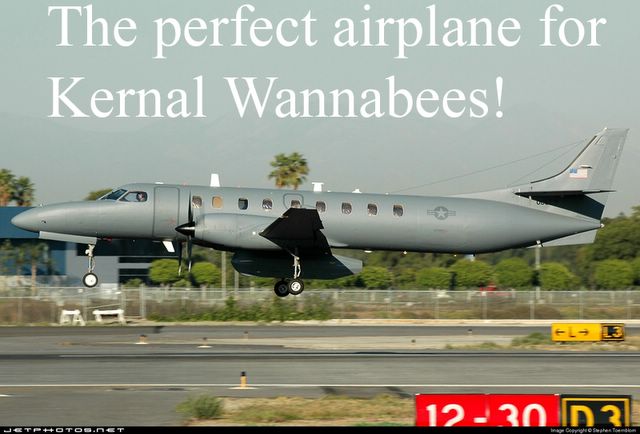
Taxiing out for takeoff last week at ONT and I spotted this C-26B Metro. It took some searching but I found this picture of the aircraft. Its used by the California Guard in drug interdiction.

Friday, December 02, 2005

Election Results

Well I got trounced...which is not really such a bad thing. Unions seem to bring out the very worst in people with grown men ending up sounding like school children. So let the other guy trudge down to union hq and field phone calls from crybabies who feel put out at having to do their job.

Spam

Just checked in after not posting for a few months. Sorry about that. Found 23 comments to a recent post and thought I must be a genius...but it was spam. So I've turned on the word verification on comments to prevent spammers.

Campaign Speech

I recently ran for our union domicile chairman and here is my campaign speech:

My name is Robert **** and at the risk of an intervention, I’d like to ask for your vote for domicile representative. When an organization is facing challenges, agility and focus are traits that are essential for survival and success. These times are very challenging for the airline industry but as the old proverb goes, with challenge comes opportunity.

I am concerned that our union may be losing its focus.

John O’Sullivan, former editor of National Review, recognized that any organization which is not tightly focused on an easily quantifi able goal, will over time suffer mission creep. Instead of doing a few things well, it will do many things poorly. O’Sullivan’s Law, as it came to be known, seems to be at work in our union just when we can least afford it. Our mission statement lists three goals of the union: contract negotiations, contract maintenance and enforcement, and promoting professionalism and safety through communication. It is through this third avenue that much mischief occurs. Endless tail-chasing, bickering, and navel-gazing over non-essential activities is a luxury we can no longer afford. And we certainly cannot afford it at almost $200.00 per hour. Let me be clear: the (few) things that Swapa elects to do it should do exceedingly well. The rest should be tossed or done on a truly volunteer basis.

Here are some thoughts on a few itemso of recent interest:

Pay Givebacks: Any talk of pay givebacks prior to the company even bringing up the issue is silly andsaid, he has no intention of asking for our raise to be returned. Nonetheless, the call for givebacks has a good chance of being made within the next year or two as fuel hedges expire. If and when it comes, I will be adamant that any cuts be made equally across all employee groups if at all. The idea that pilots should give up more because we make more should be sent back to its origins in Russia, China, and San Francisco.

Preferential Bidding: I am skeptical of the concept. While the principle seems benign, I fear it could well turn into a Trojan horse concerning our work rules. The Law of Unintended Consequences can be a harsh teacher as any pilot who reads our contract has found out after a chat with scheduling during a reroute or JA. What seemed like plain English only a few minutes before can suddenly have an entirely new meaning. The devil is in the details, but with PBS the details are written in computer code owned and administered by the company. In any event, PBS should be thought of as a work rule concession to be negotiated for other benefits to the pilot group.

Age 60 Retirement: I am in favor of the age 60 rule being repealed but against the use of any mandatorily collected union dues being used to fund lobbying efforts. There are two simple reasons: It is still a controversial topic among the membership, and it is peripheral to the mission of the union.

Budget: We have clearly blown our budget by wanting more union than our dues will support. Metastasizing committees concerning everything from jumpseat to the military are great to have around, but they bleed funds and distract the BOD and executives from the core mission of contract negotiation and maintenance. Conversion of the Secretary/Treasurer position from a pilot to a full time financial expert would be a priority as would the conversion of non-core committees to true volunteer status. Ultimately, dues should be reduced from 1% to perhaps .8% or even less.

Safety: The question I’ve always asked is that if we as pilots feel that our employer runs the operation in such a manner that we need to deduct several hundreds of thousands of dollars from our paychecks to bring it up to snuff, isn’t that a sum that perhaps the management and stockholders of the airline should shoulder? ASAP has clear benefits, but I’m unsure about the rest.

Information and Communication: Spending nearly $100,000 on the Reporting Point and another $214,000 on the web site simply seems redundant to me. The newsletter should be in electronic form only. The Government Affairs committee is a great clipping service but seems expensive at $100,000.


Thanks for your consideration.